
At a convenience store counter or a street-corner shop, you give your phone number and your prepaid call and data balance is topped up on the spot. In emerging markets where prepaid phones dominate, this is completely ordinary. The electronic reload, or e-load, is traced to Smart Load, a service from Philippine telecom operator Smart Communications. Using public records, this piece looks at how the service came about and the marketing that made it spread.
1. What Smart Load is
Smart Load tops up a prepaid phone balance electronically over the network, instead of having users enter the scratch-off number on a prepaid card. Wikipedia's entry on electronic reloading describes Smart Load as the world's first electronic reload service, and notes that it made micro top-ups in small units possible. Following its success, rival Globe Telecom introduced a similar system.
International recognition came early. According to Philstar, Smart Load was named best consumer mobile application or service at the GSM Awards held in Cannes, France, in February 2004. The same year it won “most innovative application” at the Frost & Sullivan Asia Pacific Technology Awards, where the citation introduced it as the world's first electronic prepaid reload. The newspaper reported at the time that the service had started a trend among overseas operators.
2. The background: A country of prepaid and texting
Smart Load grew out of telecom conditions specific to the Philippines. According to International Telecommunication Union (ITU) materials, prepaid mobile service took off in earnest in the Philippines in 1999, and SMS spread explosively because it was offered as a free add-on. By 2005, an average of 250 million text messages, about six per person, were sent each day.
In a prepaid-centered market, users top up small balances frequently. Paper prepaid cards, however, carry heavy costs for printing, delivery and inventory, and their face values cannot go below a certain level. Electronic reloading removed those logistical limits and made topping up possible anytime, in any amount, which made sense for both users and the operator.
3. Strategy one: Smaller amounts, a digital version of selling in portions
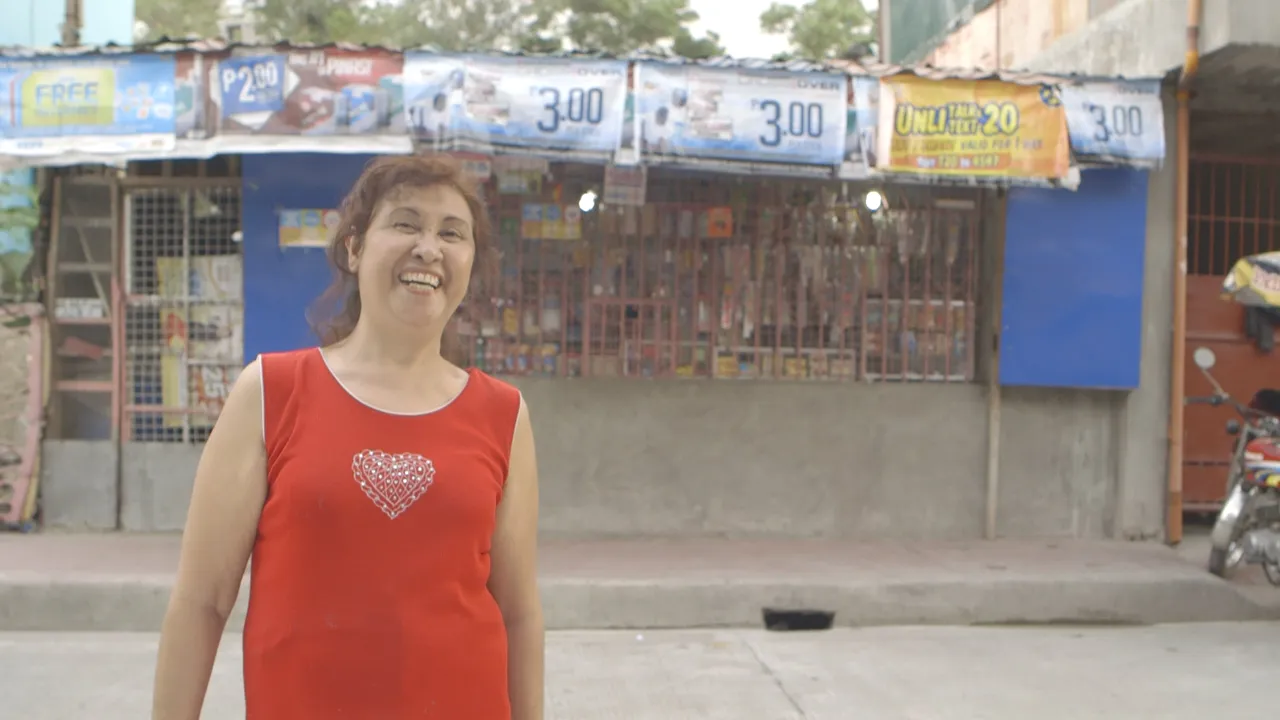
In the Philippines, the habit of tingi, buying daily goods one portion at a time, is deeply rooted. Smart Load brought that buying habit to telecoms. Going electronic made top-ups in small denominations possible, and being able to buy just what would be used that day let lower-income people and those living on daily wages keep using their phones with ease.
That small-amount design continues today. TNT, the Smart group's low-price brand, offers small loads such as 10 pesos (valid for three days), 15 pesos (valid for 15 days) and 30 pesos (valid for 15 days), which Wikipedia describes as among the most affordable loads in the country. The idea of selling small and often, rather than selling big, to maximize usage and customer contact underpinned the spread of e-load.
4. Strategy two: Turning neighborhood stores into sales agents
Another strength of e-load was that anyone with a mobile phone could become a seller. Sari-sari stores, small family-run shops estimated to number about 1.3 million nationwide, as well as individuals, became retailers selling load through a dedicated SIM. A research blog of the University of California, Irvine's Institute for Money, Technology and Financial Inclusion (IMTFI) notes that Smart's mobile money business was originally conceived as a way to extend e-load selling to its entire customer base.
Incentives to recruit sellers were generous. According to a GSMA report, commissions for load retailers in the Philippines exceed 10%. In 2015, the Inquirer described a case from Smart's retailer rewards program, Ka-Partner: a store owner who also drove a tricycle sold about 1,000 pesos of load a day and won the 1 million peso grand prize in a raffle he entered with points earned from his sales. A Smart representative quoted in the article described retailers as the last layer before the product reaches consumers.
Rather than only stimulating demand through advertising, Smart gave countless neighborhood shops a reason to sell, and its sales network grew rapidly as a result. This was the biggest reason Smart Load became a national service in a short time.
5. Strategy three: A system users could share with each other
Smart also offered PasaLoad, which let users send part of their own balance by SMS to other Smart prepaid users. Being able to send small amounts to family and friends when they ran out of load worked as a way for users themselves to spread the service.
The same thinking leads to mobile money. GSMA describes Smart Money, launched by Smart with Banco de Oro (BDO) in 2001, as the world's first example of mobile money. IMTFI points out that it came six years before Kenya's M-PESA, showing that the ground for treating phone balances as money was laid early in the Philippines.
6. E-load around the world
Today, electronic prepaid reloads are made through many channels, including stores, ATMs, banking apps and e-wallets. Cross-border top-ups have also become common: international money transfer service WorldRemit lets people abroad send load directly to Smart mobile phones in the Philippines.
The lesson from Smart Load is that how a service is sold matters more than the technology itself. It lowered the barrier to purchase with small amounts, turned neighborhood shops into a sales network and built in a way for users to spread it. With all three in place, a service born in the Philippines became standard infrastructure around the world, especially in emerging markets.
Sources
Philstar, Smart captures 2 major int'l awards (May 29, 2004)
The Manila Times, Cautious spending seen benefiting sari-sari stores
GSMA, Mobile Money in the Philippines – The Market, The Models and Regulation
Inquirer Business, Booming e-load trade pays off for cash-strapped retailer
GSMA, Mobile money in the Philippines: Market conditions drive innovation with Smart Money and GCash