
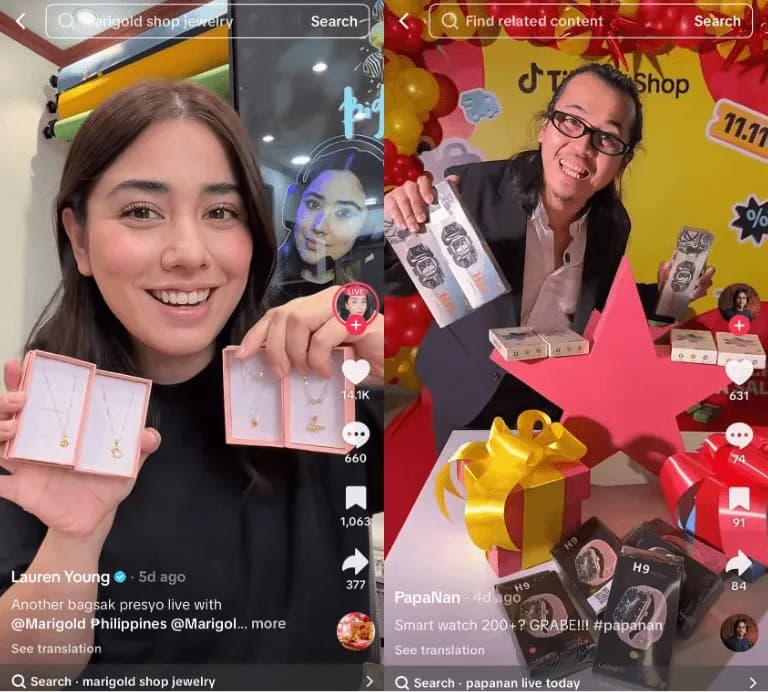
Open a live stream on Facebook in the Philippines and you will often find a seller showing clothes or cosmetics to the camera one item at a time while comments reading “Mine!” pour in. The first person to type “Mine” wins the right to buy. This “mine culture” is the defining mechanism of Philippine live commerce. This piece uses data to follow how a selling method that began as personal side income grew into a market of real scale.
1. How 'Mine' sells
According to Philstar's lifestyle site, the seller presents an item and responds to the first viewer who comments “Mine” with “Sayo na” (“it's yours”), reading out the buyer's name. Buyers are called “miners,” and the rule is first come, first served. People who comment but never actually buy are called “joy miners.” Seller Madel delos Santos, featured in the article, began live selling around 2016, when Facebook Live launched; her monthly sales reached seven figures in pesos, and on her best day she sold 1 million pesos.
What stands out is that transactions are completed using only the comments and Messenger, without relying on dedicated platform features. Meta shut down Facebook's live shopping feature in October 2022, but the feature had been offered only in the United States and Thailand, and it was reported that Philippine sellers trading through comments were unaffected.
2. Philippine live commerce in numbers
In a survey conducted in December 2023 by research firm Decision Lab (701 respondents), 80% of Philippine respondents said they watch live streams every week and 64% said they had watched shopping streams. Of shopping-stream viewers, 51% had actually made a purchase, and 89% had watched live streams on Facebook. Fashion was the top purchase category at 94%.
Sellers are just as engaged. In a 2023 survey by logistics company Ninja Van of more than 1,000 sellers across six Southeast Asian markets, 47% of Philippine sellers went live every day, far above the regional average of 31%. They streamed up to 14 hours a week, more than double the regional average of about six hours. And 52% said live selling is more profitable than listing on marketplaces.
3. TikTok Shop's surge is redrawing the map
According to research firm Cube Asia, the combined gross merchandise value (GMV) of Shopee, Lazada and TikTok Shop in the Philippines rose 15% year on year to US$22 billion in 2025. Shopee kept the top spot at about US$12 billion, while TikTok Shop grew 53% to US$6 billion, lifting its share from 14% in 2023 to 29% in 2025 and to 35% in the fourth quarter of 2025. Lazada, by contrast, fell to US$3 billion, and its share dropped from 28% in 2024 to 16%. Beauty accounts for 28% of TikTok Shop's GMV in the Philippines.
TikTok Shop said it had 2 million sellers in the Philippines as of October 2024. It said local sellers' sales grew more than 200% in 2025 and named actress Lauren Young, who did more than 100 live streams totaling more than 360 hours, its creator of the year. Brands that grew around live commerce have also emerged, such as Dood, an innerwear brand founded in 2021.
4. Rules starting to catch up
Regulation has developed alongside the market. The Internet Transactions Act (Republic Act No. 11967), enacted in December 2023, created an E-Commerce Bureau under the Department of Trade and Industry (DTI) and requires sellers to display prices and issue receipts. Platforms that fail to remove prohibited goods after notice are jointly liable, and deceptive practices carry fines of 20,000 to 100,000 pesos for a first offense and 500,000 to 1 million pesos for a third. The implementing rules were signed in May 2024.
On tax, the Bureau of Internal Revenue (BIR) began requiring platforms to withhold tax from sellers on July 15, 2024, and asked all online sellers to register regardless of size. The same year, it required sellers to display their certificate of registration on their sales pages and urged them to show it during live streams as well.
Problems remain, however. In 2023, business outlet The Ken reported a case in which a mystery box sold on Facebook Live as containing Zara and H&M clothing turned out, on arrival, to hold 18 scraps of fabric. Precisely because trust drives sales in this market, clearer rules work in favor of legitimate sellers.
5. What it means for Japanese companies
Live commerce in the Philippines is closer to interactive in-store selling than to advertising. Viewers shop while enjoying the banter with sellers and the tension of first come, first served. For Japanese companies entering the market, partnering with local sellers and creators who already have loyal viewers is faster than building a streaming operation from scratch. Given that the platform landscape shifts sharply from year to year, a realistic approach is to test Facebook, TikTok Shop and Shopee in parallel and adjust the allocation based on response.
Sources
Interaksyon, Facebook to scrap live shopping feature in October
ABS-CBN, With 2 million sellers, TikTok Shop already among top players in PH
TikTok Newsroom, TikTok Shop drives 200% increase in sales for local sellers in 2025
Batas Natin, Republic Act No. 11967 (Internet Transactions Act of 2023)
DTI, DTI leads interagency signing of Internet Transactions Act guidelines
Daily Tribune, BIR vows to enforce online sellers' withholding tax
Grant Thornton Philippines, Revisiting the tax compliance requirements of online sellers
The Ken, How livestream sellers in the Philippines double up as scammers on Shopee, FB