
Rice is practically the Philippines' national food. Mang Inasal, a chain of charcoal-grilled chicken restaurants, built fans nationwide by serving that rice “unlimited” (Unli-Rice). Putting chicken inasal, a regional grilled chicken dish, at the center, it grew into a brand of about 600 stores nationwide in roughly 20 years after its founding. Using public information, this piece examines the marketing that supported that growth.
1. It began with one store in Iloilo
Mang Inasal opened its first store on December 12, 2003, in a shopping mall in Iloilo City in the Visayas, the central Philippines. Founder Edgar “Injap” Sia II started the business with 2.4 million pesos borrowed from his father. The name means “Mr. Barbecue” in Ilonggo. It began franchising in 2005, reached 100 stores in 2009 and 500 in 2018.
The rapid growth caught the eye of Jollibee Foods Corporation (JFC), the country's largest restaurant company. In 2010 JFC acquired 70% of Mang Inasal, which then had 303 stores, for 3 billion pesos, and in 2016 it bought the remaining 30% for about 2 billion pesos, making it a wholly owned subsidiary. Founder Sia later went on to success as a businessman leading real estate company DoubleDragon.
2. The biggest weapon: Unlimited rice
Mang Inasal's signature is the unlimited rice served with its chicken inasal. According to the company, this has been offered since its earliest days and was a first in the Philippine fast-food industry.
Rice sits at the center of the Filipino diet. Philippine Statistics Authority (PSA) data put annual rice consumption at about 119 kilograms per person. Meeting head-on the desire to eat plenty of rice, rather than plenty of side dishes, created satisfaction beyond the price and a strong reason to visit. In March 2026, a video of a customer bagging free rice in a store went viral with 10 million views, showing that Unli-Rice still gets people talking.
3. Making a regional dish a national staple
Chicken inasal is a regional dish from the Visayas: chicken marinated in calamansi, a lemon-like citrus, black pepper, coconut vinegar and annatto, then grilled over charcoal. Mang Inasal kept the local names for cuts on its menu, pecho for breast and wing and paa for leg, putting regional food culture front and center.
The brand positions itself as the Philippines' grill expert. Its fan community “Mang Inasal Nation,” launched in 2022, has more than 300,000 members. In a 2022 third-party survey the company released, more than 90% of 800 consumers named Mang Inasal as having the best-tasting chicken inasal.
4. A long partnership with a national star, and ties to tourism
The face of its advertising is hugely popular actor Coco Martin. According to the company's president, Martin has been the face of the brand since 2016, and a new campaign featuring him launched in January 2026. Using the same actor over many years has cemented the association of Mang Inasal with Coco Martin.
Anniversary promotions also generate buzz. On December 12, 2023, its 20th anniversary, it sold a chicken-and-rice meal for 99 pesos for one day only. In January 2025 it teamed up with the Department of Tourism on a campaign promoting regional flavors and the appeal of the Philippines around local festivals such as Cebu's Sinulog and Iloilo's Dinagyang.
5. The next stage of growth
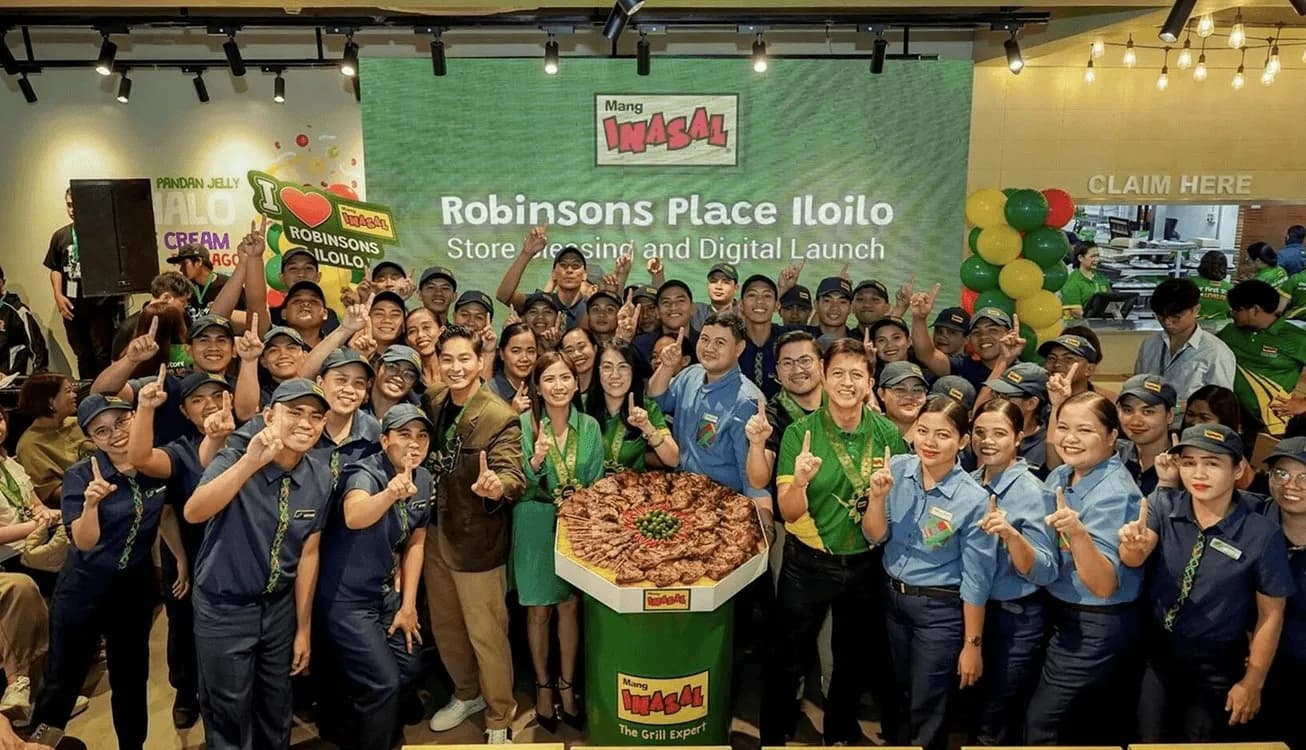
As of December 2025 it had 597 stores, and it opened its first drive-through in December 2024. The company aims to reach 1,000 stores by 2030. In brand valuation firm Brand Finance's 2025 study, it was named the strongest quick-service restaurant brand in the Philippines.
6. What it means for Japanese companies
The core of Mang Inasal's success is that it built the experience Filipinos value most, eating rice until full, into the product design itself. When Japanese restaurant brands enter the Philippines, thinking beyond localizing the taste of the menu to how the staple rice is served and how fullness is delivered makes it easier to convey value beyond the price.