
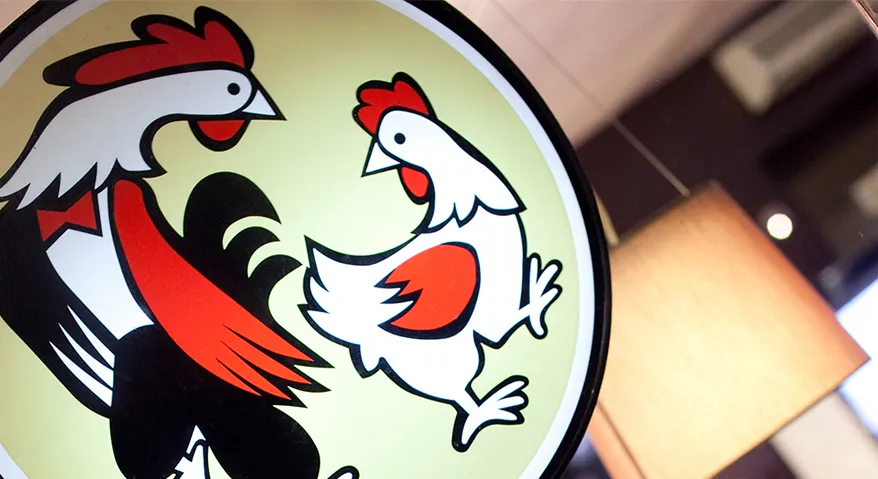
When there is a birthday, a graduation or a family gathering in the Philippines, Max's Restaurant is one of the first names to come up. Founded in 1945, just after World War II, it marked its 80th anniversary in 2025. Billing itself as “The House That Fried Chicken Built,” the institution has won support across generations with an unchanging taste and its positioning as a place for family. Using public information, this piece traces how it built its brand.
1. It began with fried chicken served to American soldiers
Max's Restaurant was founded in October 1945 in Quezon City, Metro Manila. Founder Maximo Jimenez was a Stanford-educated teacher, and the business is said to have started when American soldiers stationed in the area after the war kept coming to his home for drinks and wanted to pay, so he opened a cafe for them. The fried chicken created by his niece Ruby Trota, who ran the kitchen, became popular with the soldiers and in time spread to Filipinos too.
The company's marketing head has said the chicken recipe has not changed since 1945. A restaurant still stands on the founding site, and for the 70th anniversary in 2015 a small museum was set up inside. A lounge was added in 2024, and a cafe also operates there. The company treats its founding story itself as a brand asset.
2. 'Sarap to the bones!': Positioned as the place for family celebrations
Max's advertising catchphrase is “Sarap to the bones!” (delicious to the bones), introduced in 1993. Its ads have featured national stars such as singer Gary Valenciano (1996–1999), actor Piolo Pascual (2002–2011) and Coco Martin (2012–2014). Martin had worked as a waiter at Max's in 2001, a connection that also drew attention.
At the core of the brand is family. Its 2019 ad campaign “Every Kind of Family” showed families of many kinds gathering at a Max's table. The company's marketing head has explained that a Max's table is one shared by several generations together. As a perk for loyalty card members, it serves a free birthday platter with fried chicken, pancit (stir-fried noodles) and caramel bars for dessert.
3. Growth as a restaurant group
In 2014, Max's acquired the corporate group that owned Pancake House and renamed itself Max's Group (MGI). Its portfolio came to include many brands, such as Pancake House, Yellow Cab (pizza) and the Philippine business of Krispy Kreme, and it was reported at the time to have become the country's largest casual dining chain. In 2019 it reached sales of 14.4 billion pesos and 760 stores across the group.
Since the pandemic, however, it has also been reviewing its store network. The group had 610 stores at the end of 2024, down from 658 a year earlier. Sales in 2024 were 12.2 billion pesos.
4. To Filipino communities abroad
Max's expanded abroad early. It has operated in the United States since 1982 and now has 21 stores in North America. In 2011 it opened in Dubai, United Arab Emirates, sourcing both staff and ingredients from Manila and welcoming mainly Filipino customers. In 2018 it opened in Winnipeg, Canada, where its CEO spoke of bringing the taste of home to fellow Filipinos.
Its approach to choosing locations is clear. For its first store in Jacksonville, Florida, planned for 2025, the operator cited demographic research showing a large Filipino community in Jacksonville as the deciding factor. As of its 80th anniversary, Max's had 160 stores in the Philippines and 28 abroad.
5. Celebrating 80 years with '5-peso chicken'
Its 80th-anniversary promotion also drew attention. On October 18, 2025, it sold half a fried chicken for 5 pesos, payable only in 5-peso coins, and 2,884 people came. With a price recalling its founding era, the promotion conveyed the brand's history to both longtime fans and a new generation.
6. What it means for Japanese companies
Max's shows the strength of holding a position as the place for a family's special days over many years. Family ties are strong in the Philippines, and celebrations are a major spending occasion. When Japanese restaurant brands enter the Philippines, offering dishes for families and large groups and ways to celebrate occasions like birthdays, not just everyday meals for individuals, could let them become a deep part of local life.