

In the Philippines, 9.9, 10.10, 11.11 and 12.12 are no longer just dates. They are mega online sales that run from September to Christmas, the season Filipinos call the "ber months." Shopee, the Singapore-based e-commerce platform, did more than anyone to make these "double days" national events. Using public information, this piece examines its marketing playbook.
1. Creating a shopping holiday
Shopee was founded in Singapore in 2015 and marked a decade in the Philippines in 2025. Its COO said the 9.9 Super Shopping Day was "created in 2016" to grow e-commerce across the region. At the time, Shopee was not the market leader: in 2017, it ranked only third in Philippine e-commerce web traffic.
The double days gave shoppers a reason to come back on specific dates, with discounts, free shipping and vouchers concentrated on a single day. Over time the sales stretched into longer seasons; in 2024, Shopee's Philippine 11.11 and 12.12 campaign ran from late October to mid-December.
2. Celebrities and Christmas jingles
Shopee leaned heavily on Filipino celebrities. In April 2018, actress Anne Curtis became Shopee Philippines' first official brand ambassador and starred in its first TV commercial. Its biggest hit was with Jose Mari Chan, the singer whose songs are the unofficial soundtrack of the Philippine Christmas season. Shopee's Christmas jingle with him in 2018 drew more than 19 million views online, and he remained its Christmas ambassador for years.
The roster grew to include TV host Vice Ganda, actress Kim Chiu, and international stars such as Jackie Chan and K-pop groups. "We have very diverse users, and we partner with different celebrities they can relate to," a regional marketing lead said in 2021. In September 2026, Kris Aquino returned as an ambassador for the 10.10, 11.11 and 12.12 sales.
3. Prime-time TV specials as "shoppertainment"
Shopee also took its sales to broadcast television. Its first 11.11 TV special aired on GMA-7 on November 10, 2019, with performances by Alden Richards, Maine Mendoza and Heart Evangelista, and more than ₱11 million in prizes, including a car and a house and lot. Viewers joined in-app games such as "Shopee Shake" while watching. Later specials featured K-pop acts such as NCT 127 and TXT, mixing variety-show entertainment with shopping.
4. The shift to live selling and video
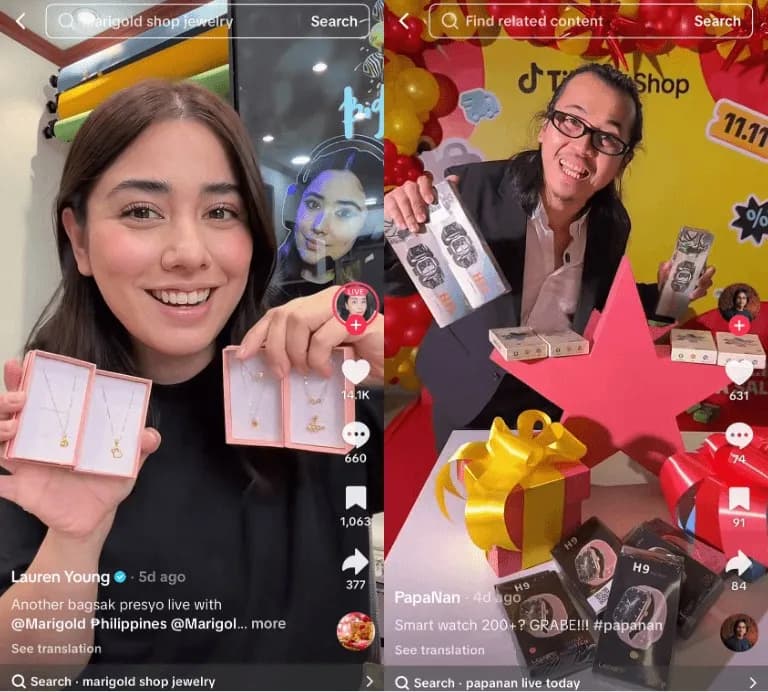
In recent years, the focus has moved to live streams and short videos. During 12.12 in 2023, Shopee Live orders in the Philippines rose 50-fold and new buyers rose 46-fold. "Shopping on the platform has become part of the Filipinos' purchasing behavior, especially during key celebrations," said Vincent Lee, head of Shopee Philippines. During 11.11 in 2024, Shopee Video orders rose 11-fold and affiliate sales rose fivefold, with order surges in Cebu, Cavite, Laguna, Bacolod and Iloilo.
The trend continued in 2026. During 9.9, watch time on Shopee Video and Shopee Drama rose 79% year on year, and orders fulfilled by Shopee's own logistics were 2.5 times higher than a year earlier.
5. Staying on top as competition shifts
Shopee remains the leader, but the market is changing. According to estimates by research firm Cube Asia, Shopee held 55% of the combined gross merchandise value of the top three platforms in the Philippines in 2025, while TikTok Shop rose to 29% and Lazada fell to 16%. For its 10th anniversary in November 2025, Shopee reunited past ambassadors in a holiday campaign. "A decade here taught us that e-commerce works best when you listen," Lee said.
6. What it means for Japanese companies
Shopee shows that in the Philippines, shopping is entertainment. For Japanese brands selling online there, the double days are the key moments to plan around, especially from 9.9 to 12.12 when holiday spending peaks. The lessons are to combine discounts with celebrities, games and live content, to work with local creators and affiliates, and to think beyond Metro Manila, since much of the growth now comes from the provinces.